

 Rohit
Rohit
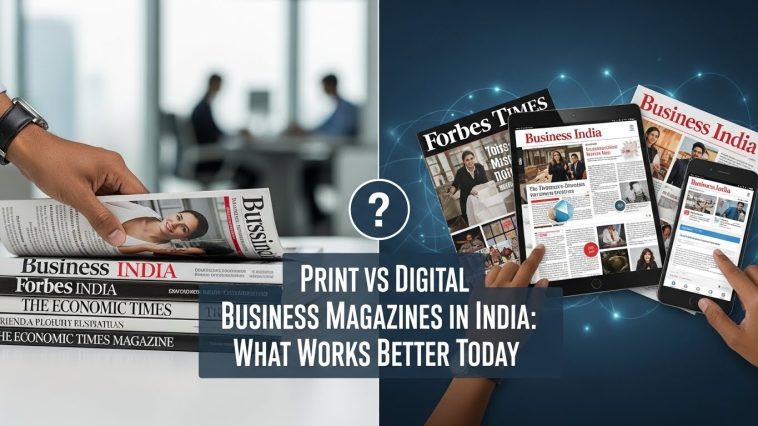
Business magazines have always played an important role in India’s business world. For many years, founders, CEOs, and professionals depended on printed magazines to understand markets, leadership trends, and success stories. Today, the way people consume business information has changed.
Entrepreneurs now read articles on phones, tablets, and laptops. At the same time, printed business magazines still carry respect and authority. This leads to a common question for Indian founders. Should you focus on print business magazines or digital business magazines?
The truth is simple. Both formats matter, but they work in different ways. This detailed guide explains how print and digital business magazines compare, where each one performs better, and what truly works best for Indian entrepreneurs today.
The Evolution of Business Magazines in India
Business magazines in India started as print only publications. They were trusted sources of deep analysis, interviews, and policy insights. For decades, these magazines shaped opinions and helped entrepreneurs learn from industry leaders.
As internet access expanded and smartphones became common, digital business magazines entered the picture. They offered faster updates, wider reach, and easier access. Today, print and digital magazines exist together, serving different reading habits and business needs.
Understanding this shift helps founders make smarter choices about where to read, learn, and get featured.
Understanding Print Business Magazines
Print business magazines are physical publications released on a fixed schedule, such as monthly or weekly. They focus on long form stories, expert interviews, and carefully researched features.
For many entrepreneurs, print magazines represent seriousness and trust. Holding a physical copy often feels more credible than reading a short online article.
1. Strengths of Print Business Magazines
Print magazines encourage focused reading. There are no pop ups or notifications, which helps readers fully absorb the content.
They also carry strong brand value. A feature or cover story in a respected print magazine is often seen as a major milestone for founders.
2. Limitations of Print Business Magazines
Print magazines take time to publish. They cannot respond quickly to breaking news or sudden market changes.
Their reach is also limited by location and distribution costs. Many younger readers prefer digital content over physical copies.
Understanding Digital Business Magazines
Digital business magazines are published online through websites, apps, email newsletters, and social platforms. They are designed for speed, convenience, and frequent updates.
Founders can access digital magazines anytime and from anywhere, making them ideal for daily business learning.
1. Strengths of Digital Business Magazines
Digital magazines deliver information quickly. News, trends, and expert opinions can be published within minutes.
They also support multimedia content such as videos, podcasts, and charts, which helps explain complex ideas easily.
2. Limitations of Digital Business Magazines
The online space is crowded with content. Not every digital publication follows strong editorial standards.
Readers often skim digital articles instead of reading them deeply, which can reduce long term impact.
Print vs Digital: A Clear Comparison
Instead of asking which format is better overall, founders should ask which format works better for their specific goals.
| Sr. No. | Comparison Point | Print Business Magazines | Digital Business Magazines |
|---|---|---|---|
| 1 | Trust level | Seen as more trustworthy and formal | Trust depends on the platform |
| 2 | Publishing speed | Takes weeks or months | Can publish within minutes |
| 3 | Content style | Long, detailed stories | Mix of short and detailed content |
| 4 | Audience size | Smaller but serious readers | Large and diverse audience |
| 5 | Reading focus | Readers give full attention | Readers often multitask |
| 6 | Ease of access | Needs physical copy | Available on any device |
| 7 | Cost involved | High printing and distribution cost | Lower publishing cost |
| 8 | Sharing ability | Hard to share instantly | Easy to share online |
| 9 | Content lifespan | Stays relevant for a long time | Content moves fast |
| 10 | Performance insights | Limited reader data | Detailed traffic and engagement data |
What Indian Founders Prefer Today?
Most Indian founders rely on digital magazines for daily updates and industry news. They are fast, convenient, and easy to access.
However, when founders want deep insights, leadership lessons, or meaningful stories, many still prefer print magazines. This shows that preference depends more on purpose than age.
How Print Magazines Strengthen a Founder’s Credibility
Print business magazines continue to play a strong role in building reputation. Being featured in a print publication often feels more selective and prestigious.
Such features are shared during meetings, displayed in offices, and remembered for a long time. This gives print coverage lasting value.
Role of Digital Magazines in Founder Growth
Digital business magazines help founders grow visibility quickly. They offer frequent opportunities for interviews, expert columns, and thought leadership.
They also help founders reach audiences beyond their local market, which is important for startups with growth ambitions.
Advertising and Monetization Differences
Print advertising is premium and limited. It is usually chosen by established brands with higher budgets.
Digital advertising is flexible and measurable. Startups can track engagement and results more easily.
This makes digital magazines more accessible for young and growing businesses.
SEO and Discoverability Impact
Digital business magazines have a clear advantage in search engine visibility. Articles can rank on Google and bring consistent organic traffic.
Print magazines depend more on brand reputation and offline influence. Their impact is strong but less searchable.
Trust and Authenticity in the Digital Age
With the rise of AI generated content, trust has become more important. Readers are careful about what they believe online.
Print magazines benefit from strict editorial control, which increases trust.
The most respected digital magazines follow similar editorial discipline to maintain credibility.
Why the Hybrid Model Works Best
Many leading business publications in India use both print and digital formats. This hybrid approach combines credibility with reach.
Founders also benefit from this balance. Print builds authority, while digital builds visibility and engagement.
What Works Better Today: The Honest Answer
- Digital business magazines are essential for speed, reach, and regular learning.
- Print business magazines remain powerful for depth, trust, and long term reputation.
- The smartest founders use both formats based on their goals.
How Founders Should Choose the Right Platform
- Founders should first define their objective.
- For fast visibility, online presence, and thought leadership, digital magazines work better.
- For credibility, investor trust, and strong brand image, print magazines still matter.
The Future of Business Magazines in India
The future of business magazines in India is evolving rather than disappearing. Print magazines are becoming more premium and selective. Instead of covering everything, they are focusing on deeper stories, exclusive interviews, and carefully researched insights. This makes print magazines more valuable for readers who want quality over quantity.
Many print publications are also improving design, paper quality, and presentation. This premium feel helps them remain relevant in boardrooms, offices, and leadership circles. For founders, this means that print features will continue to carry weight, especially in professional and investor focused environments.
Digital business magazines, on the other hand, will continue to grow rapidly. Better internet access, affordable smartphones, and changing reading habits support this growth. Digital platforms are experimenting with newsletters, mobile first content, audio formats, and short form explainers to keep readers engaged.
Another important trend is the use of data and audience insights. Digital magazines can understand what readers like, how long they read, and which topics perform best. This allows them to improve content quality and relevance over time.
The most successful business magazines in India will be those that combine trust, consistency, and reader focused storytelling across both print and digital platforms. The future belongs to publications that focus on quality, trust, and reader value.
FAQs – (Frequently Asked Questions)
Q1. Are print business magazines still relevant in India
Yes, print magazines remain relevant for credibility, deep analysis, and premium positioning.
Q2. Do digital business magazines have wider reach
Yes, digital magazines reach larger audiences quickly, especially online readers.
Q3. Which format is better for startup founders
Both are useful. Digital helps with visibility, while print supports credibility.
Q4. Can digital magazines replace print completely
No, print magazines still offer trust and depth that digital cannot fully replace.
Q5. What is the best approach for founders today
A balanced approach works best. Use digital for reach and print for authority.
You Might Also Like This:
- Dharmil Sheth Success Story: PharmEasy Co-Founder Transformed Healthcare in India
- Top 10 Most Trusted Business Magazines in India
Conclusion:
Print and digital business magazines in India serve different purposes. There is no single winner.
Digital magazines are best for speed, access, and daily updates. Print magazines are best for trust, depth, and long term impact.
Indian founders who understand how to use both formats gain knowledge, visibility, and credibility in today’s competitive business environment.
